
Self-Leadership Starts Long Before You Lead Others
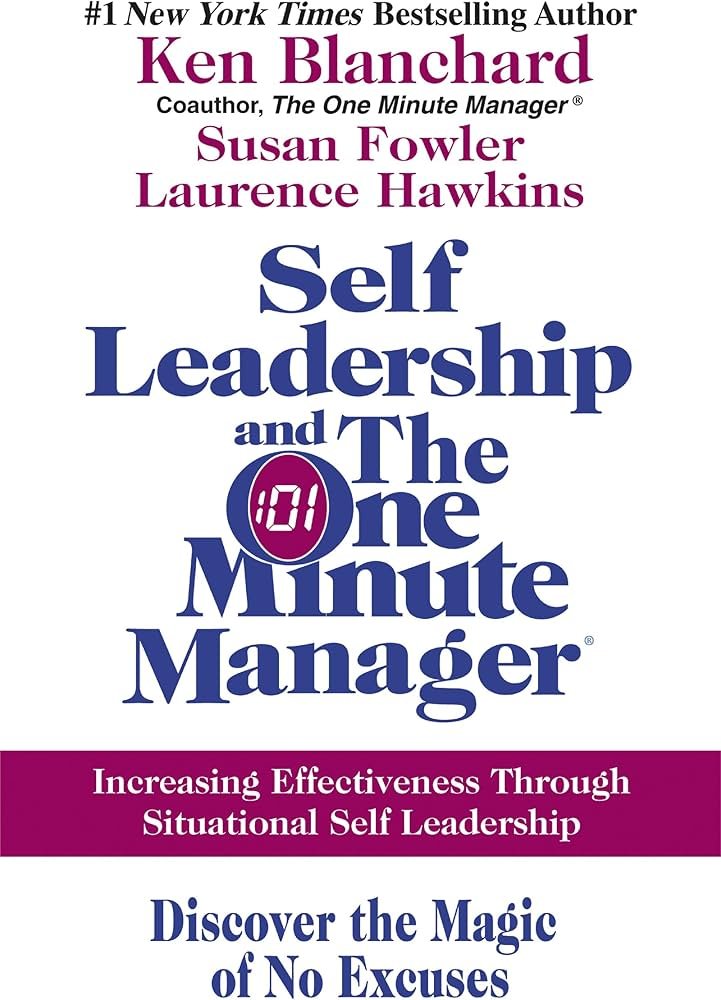
I recently finished reading Self Leadership and the One Minute Manager by Ken Blanchard, Susan Fowler, and Laurence Hawkins. Although it’s presented as a short business story, the ideas reach far beyond the workplace. It’s a book about responsibility, growth, communication, and the quiet habits that shape the way we lead ourselves long before we ever lead others.
The central idea is surprisingly simple: the most important person you’ll ever lead is yourself. Titles, promotions, and authority come later. Self-leadership comes first.
Here are the lessons that stayed with me.
1. Stop Waiting for Someone Else to Change Your Situation
One of the book’s strongest messages is that many of us spend too much time waiting for “magic”, a better boss, a better organization, more recognition, or the perfect opportunity.
While circumstances certainly matter, they rarely improve simply because we wait.
The better question is always:
What can I influence today?
That single question shifts us from blame to ownership, and from frustration to action.
2. Leadership Is a Partnership
Leadership is often discussed as if it belongs only to managers and executives. This book argues that leadership is a shared responsibility.
Organizations flourish when leaders provide direction and employees bring initiative.
Teachers teach best when students take ownership of learning.
Parents guide best when children gradually learn to think and act responsibly for themselves.
Leadership isn’t something one person does to another. It’s something people build together.
3. Most Conflicts Begin With Unspoken Expectations
One sentence from the book deserves to be remembered:
People are not mind readers.
How many disappointments begin because we expected someone to know what we never communicated?
Managers assume employees understand expectations.
Employees assume managers know they’re struggling.
Parents expect children to “know better.”
Children expect parents to understand how they feel.
The lesson is simple but profound. Clear communication is part of self-leadership. If something matters, say it. Respectfully, early, and honestly.
4. The Biggest Barriers Are Often Inside Us
One of the book’s most memorable ideas is the metaphor of the “elephant.”
The elephant represents our fears, assumptions, emotions, and limiting beliefs, the quiet stories that influence our decisions before logic has a chance to speak.
Many of the barriers we experience aren’t external.
They’re internal.
The story we tell ourselves often becomes the life we live.
Learning to question those stories may be one of the most important forms of personal growth.
5. Growth Is Different for Everyone
A particularly practical idea is that we all move through different stages of learning.
You can be highly experienced in one area and a complete beginner in another.
Recognizing where you are isn’t a weakness. It’s the starting point for improvement.
The mistake isn’t being a beginner.
The mistake is pretending you’re not.
6. Ask for What You Need
One lesson I found especially valuable is that self-leadership doesn’t mean doing everything alone.
It means knowing what kind of support you need and having the confidence to ask for it.
Strong professionals ask questions.
Strong students seek feedback.
Strong leaders admit when they don’t know something.
Independence isn’t about refusing help. It’s about taking responsibility for getting the right help.
7. Excuses Quietly Steal Our Power
The book closes by returning to one fundamental idea.
Every time we blame circumstances, difficult people, or bad luck for everything that happens to us, we surrender part of our influence.
We can’t control every outcome.
We can always control our response.
That distinction is where self-leadership begins.
Why This Matters Beyond Business
Although the book is written for workplaces, I found myself thinking about education, families, and community leadership just as much as management.
In organizations, self-leadership creates employees who solve problems instead of waiting for instructions.
In universities, it creates students who ask questions instead of waiting for perfect teaching.
In families, it encourages parents to raise children who gradually become capable of making wise decisions rather than depending on adults to solve every problem.
In our personal lives, it reminds us that growth begins when we stop asking, “Who should fix this?” and start asking, “What is my responsibility here?”
Final Reflection
The most valuable lesson I took from this book is that self-leadership isn’t about becoming independent of other people. It’s about becoming accountable for the part of life that already belongs to you.
The quality of our work, relationships, and leadership often depends less on the circumstances around us than on the habits we cultivate within ourselves.
That’s a lesson worth revisiting long after the final page.
Comments
No comments yet — be the first to share your thoughts.