
In the Midst of the Chaos, There Is a Lesson to Be Learned — The Somali Paradox
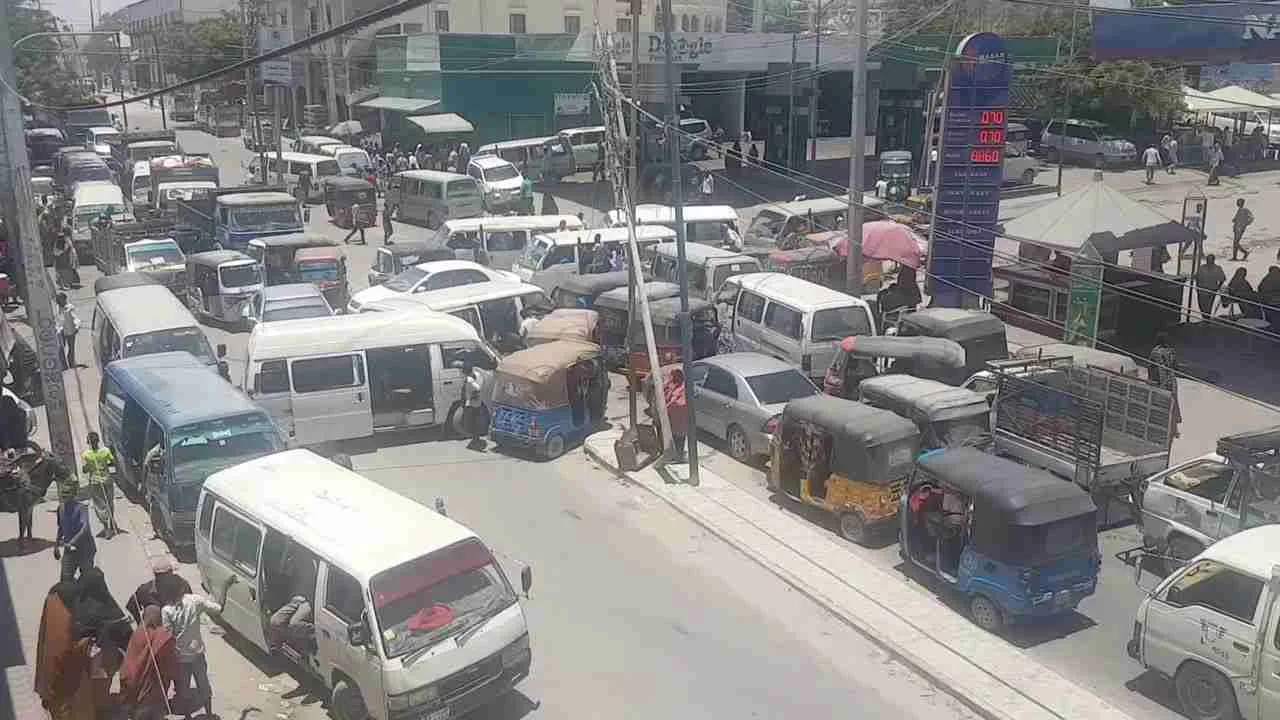
For someone arriving in one of Somalia's major cities for the first time, the road itself can be an introduction to the Somali way of life.
You come to a busy intersection and look for the things you expect to see: functioning traffic lights, marked lanes, perhaps a traffic officer directing the flow. Instead, a bajaj squeezes through from one side, a bus noses into a narrow gap, a small car finds its own way forward, and pedestrians weave their way through the moving traffic.
If you are seeing it for the first time, you might find yourself wondering: How can this possibly work? Who is going to sort all of this out? Is someone going to step in and tell everyone where to stop?
And yet, while you are still trying to make sense of it, something remarkable happens. One driver raises a hand to another. Someone flashes their headlights. Another vehicle inches forward, then stops. A few moments later, the knot begins to loosen. The bajaj finds its way through, the bus moves on, pedestrians cross, and everyone continues toward their destination.
To an outsider, it may look like chaos. To a Somali accustomed to it, there is a system at work, even if that system is not written down anywhere.
So what are we really looking at? Is it disorder, or is it a form of order whose language an outsider has yet to learn? Is it the absence of rules, or a form of negotiation through which people constantly create order as they go?
This is where what I call the Somali Way begins: the tendency to create workable systems in the midst of necessity when no ready-made system exists to do the job.
For a long time, the outside world has looked at Somalia primarily through the lens of what went wrong. The collapse of state institutions was documented. Government offices that closed, systems that disappeared, and services that failed were counted and described.
But there is another question worth asking.
While everyone was counting what had disappeared, who was counting what people built in its place?
Who measured the ingenuity that emerged from necessity? Who counted the businesses that survived, the networks that formed, and the systems communities created for themselves because they had no choice but to make things work?
A farmer does not abandon a field simply because it received little rain. If the field still produces a harvest, the farmer gathers what has grown.
Somalia is much the same. In the midst of disruption, people have cultivated and harvested lessons of their own.
Here are six of them.
1. Hawala: Trust Came Before the Money

When Somalia's formal financial system collapsed and Somali communities scattered across the world, a remarkable alternative emerged. Somalis built their own way of moving money across borders and between communities.
A mother raising children in Somalia needed the money her son had sent from abroad. A trader needed to pay a supplier in another country. A student studying overseas needed tuition money. Someone who was ill needed money for treatment.
The question was simple: how could the money get there?
A person could hand money to an agent in Toronto, and minutes later someone could collect it in Beledweyne. Money could be sent from Minneapolis and picked up in Kismaayo. A trader in Dubai could settle an account with another trader in Muqdisho. All of this could happen across enormous distances without a strong central banking system overseeing every transaction.
At the heart of it was something less tangible than money:
Trust.
Hawala companies were not simply businesses that transferred cash. They became financial institutions built largely on reputation, relationships, and reliability. Their most valuable asset was not the office where they operated. It was their name.
Break your promise, and you lose trust. Keep your promise, and your network grows.
Out of a profound need, Somali society created a financial network that eventually connected communities across continents and became useful even beyond the Somali community. Research on Somalia has described hawala as an important financial channel that helped fill the gap left by the collapse of formal state institutions and connected Somalis at home with those living abroad. Those connections have supported households, businesses, education, healthcare, and other forms of social and economic life.
Isn't there something extraordinary about that?
Money can travel thousands of kilometres across borders and reach the person it was intended for, even when there is no single national banking system directing its entire journey.
The money moved because people trusted one another.
2. Telecommunications: Reconnecting a Country by Voice

Now consider a country without a nationally built telecommunications network, yet whose people manage to stay connected across cities, rural communities, borders, and continents.
In the early years, Somalis relied on radio communication, including equipment known locally as TAAR, to maintain contact within Somalia and with neighbouring countries. It was used by people trying to locate family members separated by conflict and displacement, and it could be found wherever Somali communities were concentrated, including refugee settlements such as Dadaab in Kenya. These communication networks were also linked in practical ways to informal money-transfer arrangements.
Eventually, Somali entrepreneurs began importing telecommunications equipment, erecting towers, training workers, launching services, and competing with one another. One city after another became connected.
Mobile telecommunications became far more than a way of making phone calls. It became a bridge between rural and urban Somalia, between Somalia and the diaspora, and between people whose lives had been scattered by conflict and displacement.
A livestock trader in the countryside could find out the price in the city. A mother in a rural area could speak to her daughter abroad. A truck driver could be told where to deliver a shipment. A person without a numbered street address could nevertheless have a phone number through which the world could reach them.
Who designed such a national network?
Who decided that a tower should be built in one town and service extended to another?
In many cases, there was no grand national blueprint.
The needs of the population and the willingness of Somali entrepreneurs to respond to those needs became the blueprint.
Where there were customers, there was a reason to build. Somali telecommunications networks grew through private investment, commercial relationships, and Somali capital at home and abroad rather than through a single centrally designed national project.
The telephone did more than carry voices.
It helped stitch a scattered country back together.
3. Mobile Money: A Bank in Your Pocket

Somalis did not stop at using the mobile phone to communicate. They turned it into something much more consequential: a pocket-sized financial system.
Across rural and urban Somalia, a scene that might astonish a visitor has become completely ordinary. Someone finishes a cup of tea and pays with their phone. A bajaj driver carries a passenger and receives payment electronically. A woman selling vegetables from a small roadside stall accepts digital money. Shopkeepers, pharmacists, cobblers, traders, and countless others routinely send and receive payments through their phones.
While much of the world was building card networks, ATMs, and bank branches to make financial transactions easier, Somalis often bypassed much of that infrastructure altogether.
A small phone could be enough.
You did not necessarily need to visit a bank. You did not need to stand in a queue. In some cases, you did not even need a smartphone. A basic handset, the kind commonly called a Niicle, could be enough to complete a transaction.
Mobile money answered a very direct need: money had to move quickly, reach people wherever they were, and be usable by ordinary people.
The figures are striking. The IMF reported that around 73 percent of the population was using mobile money in 2020, while later Somali government data put usage among people aged 15 and above at around 82 percent. The World Bank has described mobile money as the dominant means of payment in Somalia.
And the significance goes beyond the numbers.
In many parts of the world, financial inclusion has traditionally followed a familiar sequence: establish banks, create accounts, introduce cards, build ATMs, and then try to extend those services to people who remain outside the banking system.
Somalia often took a different route.
For millions of people, the phone became the bank before the bank ever reached them.
Is that simply another lesson learned in the midst of disorder, or is it better understood as a quiet financial revolution?
4. Livestock: A Global Market Held Together by Relationships and Trust
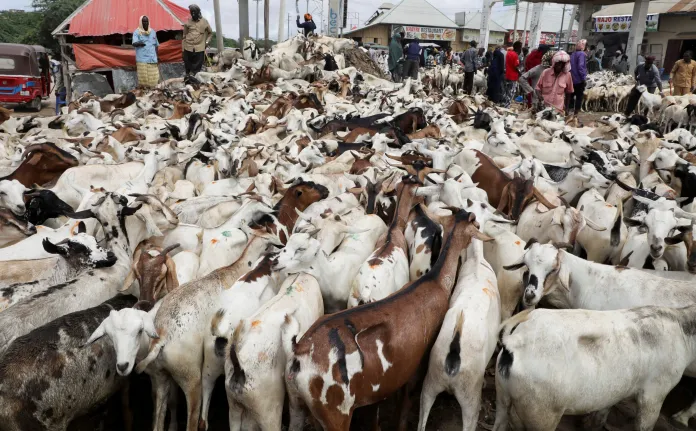
A camel or goat leaving the Somali countryside can eventually find its way to a market in Jeddah or another Gulf city.
Between those two points lies a long chain of people: pastoralists, brokers, transporters, traders, livestock handlers, people responsible for feeding and watering the animals, port operators, exporters, and agents on the other side of the sea.
They do not all work for one organization. They do not share a single office or operate from one central command.
Yet the animals are gathered, sorted, treated, transported, shipped, and eventually delivered into an international market.
What holds such a long chain together?
Part of the answer lies in market information, reputation, relationships, and agreements that may be spoken rather than written but are nevertheless treated as binding.
A phone call can reveal the latest market price. A broker's identity and reputation matter. A trader may obtain credit because of a name he has spent years building.
In 2014, Somalia exported a recorded five million head of livestock. The FAO described Somalia at the time as the world's second-largest exporter of live sheep, with livestock exports heavily dependent on private-sector trade.
How does livestock raised in remote pastoral communities find its way into international markets when formal institutions remain limited?
Again, the Somali Way offers part of the answer.
Everyone knows their role. The links between them are sustained by need, relationships, reputation, and trust.
5. Xeer: A System of Justice Under a Tree
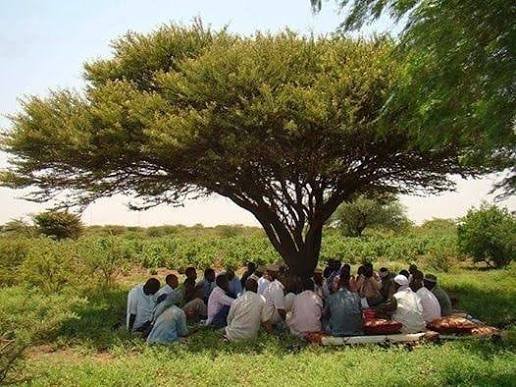
A society that trades, shares water and grazing land, raises families, and lives side by side is bound to have disputes.
But disputes do not always require a courthouse.
For generations, Somalis have relied on xeer, alongside elders, mediation, negotiation, and collective deliberation. When a conflict arises, people come together. Each side tells its story. The community recalls what happened before, established principles are brought into the discussion, and the parties are heard. A settlement is then sought that allows the community to continue living together.
There may be no courthouse.
There may be no official stamp.
There may not even be a permanent institution standing behind the decision.
And yet, a form of justice takes place.
UNESCO has described xeer as a traditional system transmitted orally from one generation to another and used to facilitate dispute resolution, trade, and the sharing of resources. During the 1990s and the years that followed, xeer and traditional elders remained an important means through which communities negotiated disputes and maintained social order.
There is a Somali saying: "Talo adigaa ku nool ee iyadu kuguma noola."
A decision does not sit somewhere waiting for you to find it. You have to seek it. You bring people together, listen, deliberate, and work toward a solution.
That is how xeer became a system capable of functioning without depending entirely on buildings, paperwork, or formal institutions.
Perhaps this is one of the deeper reasons Somali communities have endured so much disruption.
When conflict arrives, people do not simply wait for a system to come and resolve it for them.
They sit down and talk.
6. Education: The Generation That Lost Its Schools and Eventually Built Universities
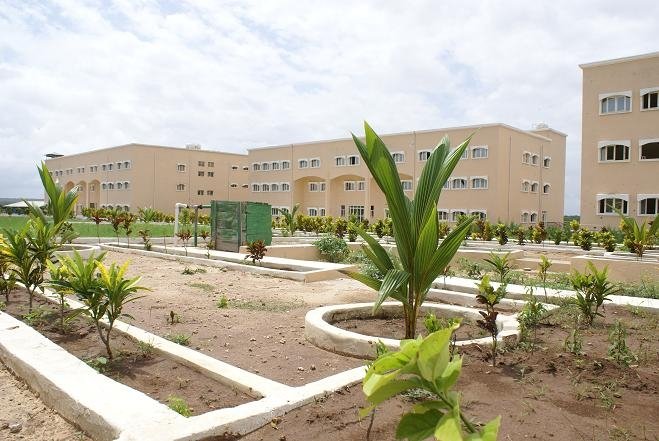
When government schools disappeared during the civil war, Somali society did not simply accept a future without education.
Parents continued to want a future for their children. Teachers did not abandon what they knew.
So what happens when the school doors close?
A house becomes a classroom. A room gets a blackboard. Parents pool whatever money they can. Teachers come together. A businessperson provides a building. Someone in the diaspora sends books or money.
Schools emerge.
Then institutes.
Then universities.
Some of the universities that today educate thousands of students were established during periods when there was no strong central government capable of building, financing, and administering a national higher-education system.
Somali academics developed curricula, recruited teachers, organized administration, enrolled students, and built institutions that eventually produced doctors, teachers, engineers, entrepreneurs, and professionals across the country.
A Somali proverb says, "Far keli ahi fool ma dhaqdo," one finger cannot wash a face.
Education was not built by one hand.
Parents, teachers, businesspeople, students, and members of the diaspora each contributed something. One provided land, another money, another knowledge, and another simply sat in a classroom and learned.
Together, their contributions became something none of them could have created alone.
And perhaps this is the most remarkable lesson of all:
A generation expected to lose its education became a generation that built universities.
The Somali Way: The System Emerges While the Work Is Being Done
Taken together, these six stories reveal a common pattern.
A need appears. People respond rather than wait for someone else to solve it. One person takes the first step, another joins, someone else improves the idea, and the wider community tests it. What works is retained. What proves useful elsewhere is carried to another town or another community. Over time, something that began as an individual response to a problem becomes a system used by thousands, sometimes millions, of people.
Traffic moves through negotiation.
Money moves through trust.
Mobile payments spread because they are convenient.
Livestock reaches international markets through networks of people.
Disputes are resolved through xeer and dialogue.
Education is built through collective effort.
Here, another Somali proverb fits perfectly: "Gacmo wadajir bay wax ku gooyaan." Many hands accomplish what one hand cannot.
But those hands do not always have to be in the same place.
One may be in Muqdisho and another in Minneapolis. One may be tending livestock in the countryside while another waits at the port to handle an export. One person sends the money, another receives it on a phone thousands of kilometres away.
The hands are scattered, but the task is shared.
That is Somali self-reliance.
It does not require everyone to be in the same room. It requires people to recognize a common need and each play their part.
The Paradox

An outsider arriving in Somalia often looks for the kind of order they already understand.
They look for an office, a sign, a licence, a stamp, a timetable, and someone officially responsible.
When they cannot find these things, they may conclude that nothing works.
But stay a little longer, and the picture begins to change.
You see money crossing continents within minutes. You see a woman selling vegetables from a small stall and accepting digital payment. You see livestock driven out of remote pastoral areas eventually reaching an international market. You see a university built by a community graduating students. You see a dispute brought to elders and resolved through dialogue. You see an intersection that appears chaotic to an outsider yet manages, moment after moment, to move hundreds of people through without the gridlock or collisions you might expect.
Then a different question begins to emerge:
Who is coordinating all of this?
Perhaps the answer is not one person, one company, or one institution.
Perhaps, in many cases, it is the community itself, made up of people who have learned how to create workable arrangements in the middle of circumstances that offer few ready-made solutions.
The Somali way of doing things can sometimes look chaotic from the outside. But beneath that surface are memory, relationships, trust, speed, compromise, and an ability to adapt when circumstances change.
It is not always a system that is designed first, written into a manual, and implemented afterward.
Often, the work begins first.
The system emerges along the way.
And once people discover that something works, they repeat it, refine it, trust it, and pass it on.
Much of the world is accustomed to building a system first and then asking people to operate within it.
Somalis have often had to do the opposite.
They start doing the work, and the system grows around it.
So the next time you look at Somalia, don't stop at the surface.
Look a little deeper.
You may discover that what first appears to be chaos contains something else entirely: an accumulated body of knowledge, adaptation, and collective ingenuity.
A lesson learned not in a classroom, but in the middle of life itself.
Welcome to the Somali Way.
In the midst of the chaos, there is a lesson to be learned.
Keep Reading
Higher Education Outcomes in Somalia: A Dead End or a Warning That Demands Attention?
Somalia's higher education system has made remarkable progress, but it now stands at a critical crossroads. Families invest scarce resources in university education, and institutions produce thousands of graduates each year. Yet unreliable labour-market information, programmes disconnected from national workforce needs, and recruitment shaped by personal networks leave many graduates unemployed and dependent on their families. The central question, therefore, is not simply how many universities Somalia has or how many students graduate each year, it is where Somali graduates go after leaving university.
Problem Solving for Teachers: Notes from a Workshop at Alnor Academy
I ran a problem-solving workshop for Alnor Academy's teaching staff, and the room gave me as much as I gave it. What started as a session on symptoms, causes, and shūrā turned into an unscripted debate about AI in homework — and why a school needs a real policy, not each teacher improvising alone.
What I Told Kismayo's Graduates about Current Employability Prospects
Notes from a lecture I gave to Kismayo's newest graduates at Agan Hotel: a degree isn't the hard part anymore, and almost nobody prepares you for what comes after it. Two doors get all the attention — start a business, or get hired — but two more, internships and volunteering, quietly build the CV that makes either one possible.
Comments
No comments yet — be the first to share your thoughts.