
Higher Education Outcomes in Somalia: A Dead End or a Warning That Demands Attention?
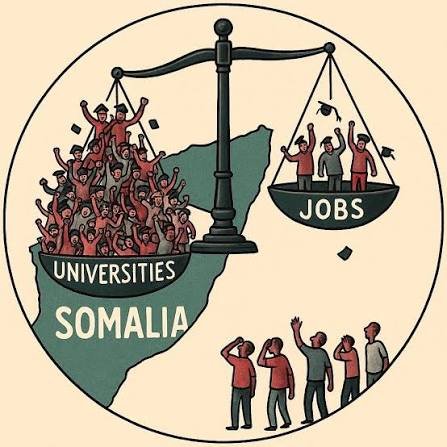
Higher education in Somalia emerged under extraordinarily difficult circumstances, at a time when establishing universities seemed nearly unimaginable. Three decades later, the progress achieved cannot be dismissed. A significant proportion of the professionals currently working in government institutions, private companies, schools, hospitals, and other organizations received their education from Somali universities.
This achievement, however, raises a difficult question: are universities producing graduates whose knowledge and skills correspond to the needs of the labour market, or are they producing a generation equipped with degrees but with few opportunities to apply their education, secure employment, or build sustainable livelihoods?
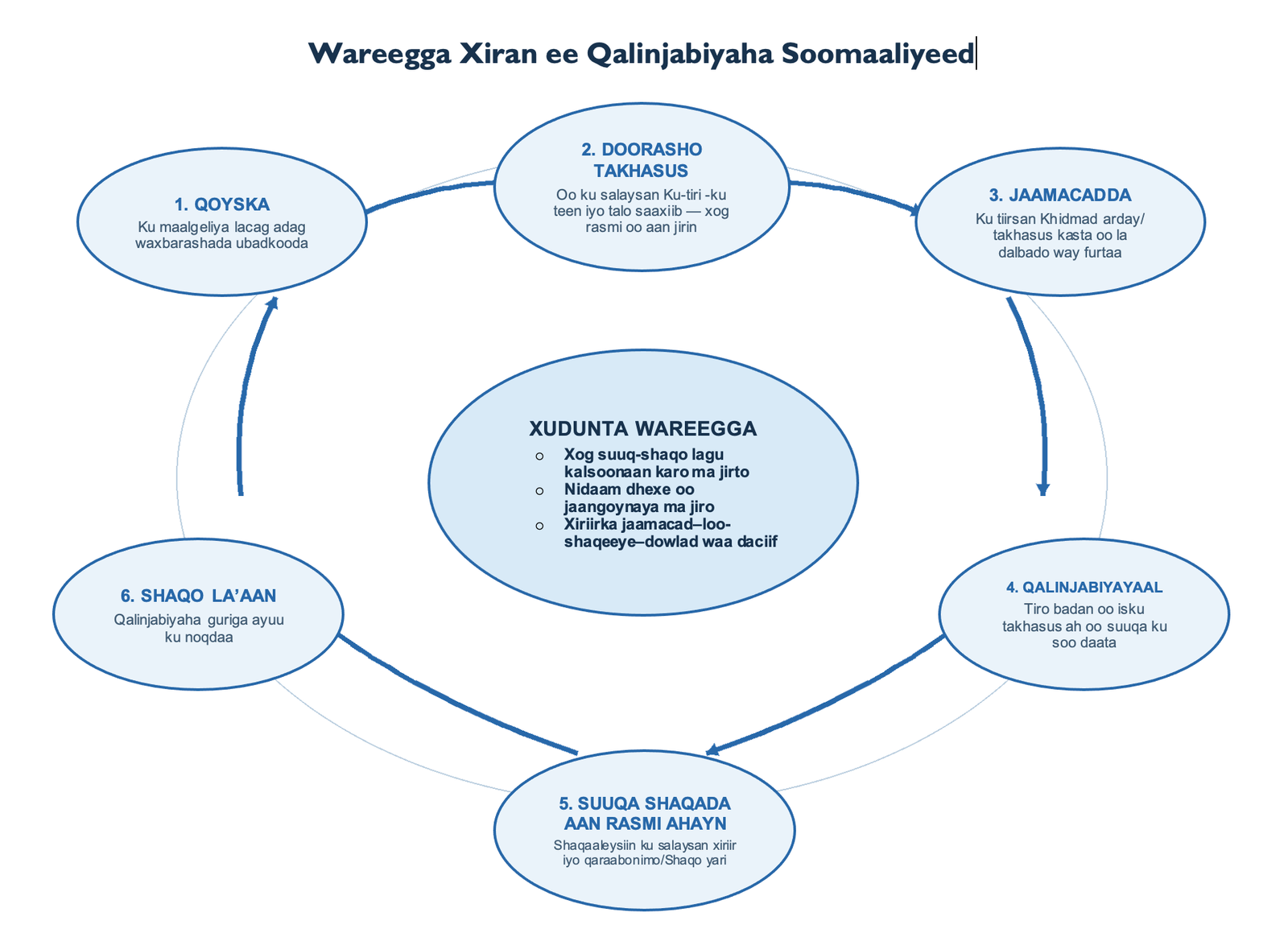
Consider a Somali family with four children. The parents have already financed the university education of their three eldest children, committing substantial resources that may have been accumulated with great difficulty. Each child successfully completed a degree. Yet none has secured employment. All three remain dependent on the household, unable to translate their qualifications into economic independence. Despite this experience, the family is now preparing to enrol its fourth child at university.
Where is this investment leading, and where has the system failed?
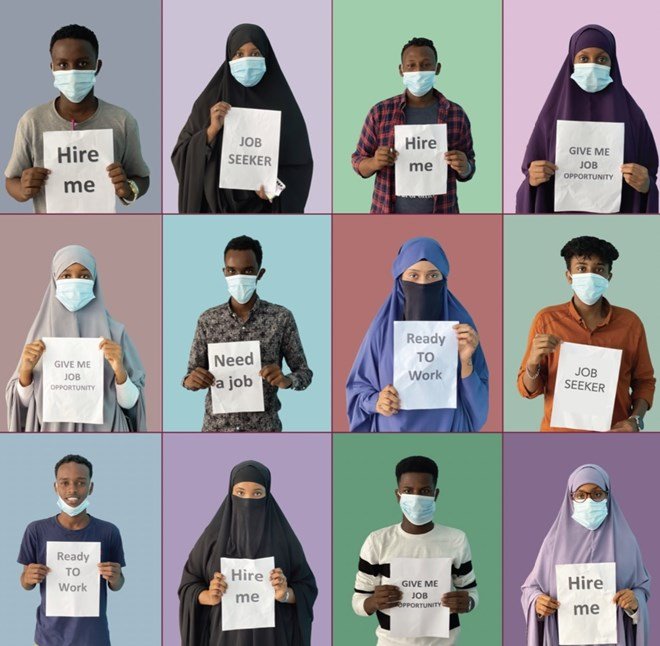
The family has no easy alternative. Should a young person who has completed secondary school simply remain at home? Is there another credible pathway that families can confidently recommend? This is not the experience of one household alone. It reflects a broader reality confronting many Somali families and a generation whose future is being invested in university degrees that may have limited value in the existing labour market.
Another development deserves careful consideration. Medicine and other health-related disciplines were once among the most sought-after university programmes in Somalia, partly because they were associated with professional prestige and relatively high earnings. Interviews with leaders of some of the country's largest universities, however, suggest that enrolment in these programmes has declined considerably. They attribute this decline to the growing number of health-science graduates who remain unemployed. As their experiences become widely known, the public increasingly perceives these disciplines as having limited employment prospects, discouraging new students from enrolling.
This points to a structural problem that extends beyond any single university or academic discipline. Somalia lacks public or private institutions that consistently produce credible data, statistics, and analysis on labour-market conditions, areas of skills demand, and graduate employment outcomes.
Where reliable information is absent, speculation and hearsay take its place. Informal conversations—what friends, relatives, and members of the wider community happen to say—often become the primary source of guidance for students choosing a field of study. When parents or students are asked why they selected a particular discipline, their answers are rarely based on labour-market research or verified evidence. More often, the decision reflects advice from an acquaintance, a relative, or prevailing opinion within the community.
Consequently, educational decisions with long-term implications for a student's life, a family's finances, and future career prospects are frequently shaped by unverified perceptions rather than dependable evidence. This is particularly concerning when families are investing scarce and hard-earned resources in their children's education.
The problem is compounded by the weak relationship among universities, employers, and the government. No effective mechanism visibly connects these three stakeholders, and each operates with significant institutional limitations.
Most Somali universities, for example, are privately owned institutions. They generally have limited financial resources and receive little or no government subsidy. Their survival therefore depends largely on student tuition fees. Under these conditions, universities have a strong incentive to offer programmes for which students are willing to pay, regardless of whether those programmes correspond to national development priorities or labour-market demand.
As long as students continue to apply for a particular discipline, universities are likely to keep admissions open. The critical question remains: who is assessing what happens to these students after graduation?
Somalia's labour market also operates predominantly through an informal economy. The government does not have comprehensive information about existing businesses, their legal status, licensing and taxation, or the number and types of workers they employ. Consequently, the country has limited capacity to measure employment demand or anticipate the skills that its economy will require in the future.
Recruitment within the private sector is similarly informal in many cases. Employment decisions are not always governed by transparent criteria, demonstrated competence, or open competition. Trust, personal networks, family relationships, and clan affiliation may carry considerable influence. Academic qualifications and professional ability alone therefore do not guarantee employment. A position may be awarded to someone without the relevant training because that person has a closer relationship with the employer or hiring decision-maker.
One university leader described the situation as a deep divide between the graduates produced by universities and the labour market expected to absorb them. Universities send students towards this divide but often lack the capacity to help them cross it and reach meaningful employment and professional stability on the other side.
Somalia rightly celebrated its universities for producing the first generation of professionals who helped rebuild essential public and private services. The country has now entered a different phase. Higher education cannot continue operating according to its original model without considering the labour market's capacity to absorb new graduates.
The imbalance among graduate numbers, employment opportunities, national skills requirements, and the absence of a central coordinating system must be addressed. This does not mean that higher education in Somalia has become a dead end. It does, however, mean that the sector has reached a critical point that demands serious attention.
Somalia needs reliable labour-market information to guide students' educational choices. It must strengthen cooperation among universities, employers, and public institutions; place greater emphasis on employability, practical skills, entrepreneurship, and innovation; and establish a government-led framework for planning and coordinating higher education with national economic priorities.
Without such measures, many graduates will continue returning to their parents' homes with qualifications that do not enable them to support themselves or their families. Some may ultimately feel compelled to pursue dangerous alternatives in search of opportunity.
The central question, therefore, is not simply how many universities Somalia has or how many students graduate each year. The question that truly matters is this:
Where does the Somali graduate go after leaving university?
Keep Reading
In the Midst of the Chaos, There Is a Lesson to Be Learned — The Somali Paradox
What looks like chaos from the outside may contain a system of its own. In Somalia, people have repeatedly built practical solutions where formal institutions were absent or unable to respond, from hawala and mobile money to telecommunications, livestock networks, xeer, and education. These are not simply stories of survival. They are stories of adaptation, trust, ingenuity, and collective action. Perhaps the real lesson is this: sometimes the system does not come first. People begin solving the problem, and the system grows around what works.
Problem Solving for Teachers: Notes from a Workshop at Alnor Academy
I ran a problem-solving workshop for Alnor Academy's teaching staff, and the room gave me as much as I gave it. What started as a session on symptoms, causes, and shūrā turned into an unscripted debate about AI in homework — and why a school needs a real policy, not each teacher improvising alone.
What I Told Kismayo's Graduates about Current Employability Prospects
Notes from a lecture I gave to Kismayo's newest graduates at Agan Hotel: a degree isn't the hard part anymore, and almost nobody prepares you for what comes after it. Two doors get all the attention — start a business, or get hired — but two more, internships and volunteering, quietly build the CV that makes either one possible.
Comments
No comments yet — be the first to share your thoughts.